
• PUBLISHING
    arrow_drop_down
    • Overview
      arrow_drop_down
      • Publishing Ethics
      • Indexing & Ranking
      • Editorial Boards
    • Journals
      arrow_drop_down
      • All Journals
      • WJEMSD
      • WJSTSD
      • IJIKMMENA
      • IJFNPH
      • IJSR
      • WJWSD
      • WJYSD
      • IJGA
    • Books
      arrow_drop_down
      • All Books
      • Outlook
      • GTSD
      • Diaspora
      • MENA
      • Africa
      • Sudan
      • Proceedings
    • Digital Library
    • Book Store
  • CONFERENCES
    arrow_drop_down
    • Overview
      arrow_drop_down
      • Past Speakers
      • Host Requirements
      • Sponsorship Opportunities
        arrow_drop_down
        • Past Sponsors
    • Search All
      arrow_drop_down
      • Forthcoming
      • Past
    • Search by Subject
      arrow_drop_down
      • Sustainability
      • United Nations
      • Diaspora
      • Africa
        arrow_drop_down
        • Sudan
      • MENA
      • Policy
        arrow_drop_down
        • Climate Change
        • Health
          arrow_drop_down
          • Covid 19
          • Public Health
        • Education
          arrow_drop_down
          • Graduates
          • E-Learning
        • Women
        • Youth
      • Leadership
      • Business
        arrow_drop_down
        • Entrepreneurship
        • Investment
  • ACADEMY
    arrow_drop_down
    • Overview
    • Training
      arrow_drop_down
      • Overview
      • Search All
        arrow_drop_down
        • SUSTAINABILITY MASTERCLASS
          arrow_drop_down
          • Economy
          • Sustainability
        • PUBLIC POLICY
          arrow_drop_down
          • Public Policy
          • Education
          • Higher Education
          • Health
            arrow_drop_down
            • Covid-19
          • Women
          • Youth
          • Security
        • DIGITAL TRANSFORMATION
          arrow_drop_down
          • Artificial Intelligence
          • Data Science
          • Digital Transformation
          • Innovation
          • Knowledge Management
          • Technology Transfer
        • BUSINESS & MANAGEMENT
          arrow_drop_down
          • Entrepreneurship
          • HRM
          • Leadership
          • Management
          • Performance Improvement
          • Investment
      • Workshops
    • Teaching
      arrow_drop_down
      • Framework
      • Universities
    • Research
      arrow_drop_down
      • Research Tracks
    • Consultancy
      arrow_drop_down
      • Smart KM
  • SDGs Universities
  • Interactive Map
  • African Universities
  • Interactive Map
  • Arab Universities
  • Interactive Map
  • Sudan Universities
  • Interactive Map
  • COMMUNITY
    arrow_drop_down
    • Overview
    • Search All
      arrow_drop_down
      • Children
      • Diaspora
      • Debates
      • Health
      • Ideas
      • Interviews
      • MENA
      • Women
      • Sudan
      • Youth
  • EXPERTS
    arrow_drop_down
    • Overview
  • Global Who’sWho
  • Interactive Map
  • Arab Who’sWho
  • Interactive Map
  • Africa Who’sWho
  • Interactive Map
  • Sudan Who’sWho
  • Interactive Map
  • Sudan Doctors
  • Interactive Map
  • PARTNERSHIPS
    arrow_drop_down
    • Association of African Universities
  • Overview
  • Framework
  • Partners
  • World Organisations
  • Search All
  • Europe
  • United Kingdom
  • North America
  • USA
  • Canada
  • Oceania
  • Australia
  • New Zealand
  • Asia
  • China
  • Africa
  • Sudan
  • MENA
  • GCC
  • UAE
  • Bahrain
  • Oman
  • KSA
  • Qatar
  • Kuwait
  • Latin America
  • Caribbean
  • United Nations
  • Private Sector
  • Financial Institutions
    arrow_drop_down
    • Chambers of Commerce
  • Think Tanks
  • Libraries
  • NGOs
  • NEWS
  • Portfolio
  • Teams
Sign in or Register

Executive Leadership and Knowledge Management for Police Officers

  • Send an email
  • Leave a review
  • Overview
  • Learning Outcome
  • Program
  • Resources
  • Participants
  • Registration
  • prev
  • next
  • Get directions
  • Leave a review
  • Share
  • prev
  • next
Overview

10 July 2023

This five-day course and tour has been designed to introduce a variety of perspectives on executive leadership and knowledge management (KM) in the public sector with special focus on Police Officers. The course aims to enable leaders and decision makers to introduce fit-for-purpose leadership styles and KM approaches to their organisations. This integrative course aims to develop a deeper understanding of the theoretical and practical aspects to leadership, and to develop the essential skills and competencies necessary to plan, monitor and control different tasks and events.

This course will also complement the different management skills already developed through earlier business and management courses. Moreover, the course addresses the practical challenges that managers face as they seek to build, upgrade and exploit knowledge assets within their organizations. Other objectives of the course include:

  • Explore the different perspectives on KM
  • Debate the importance and value of managing knowledge within your organization
  • Align KM thinking with broader, more traditional strategic approaches
  • Using participants’ own organizations as cases, participants will explore how and when they can establish KM initiatives in their organizations and who will be involved?
  • Identify and examine the objectives, advantages, drawbacks, models, stages and requirements of KM framework
  • Understand how the new KM system will allow you to capture and store knowledge through various mechanisms
  • In addition, participants will have insight into: critical analysis; interactive and team working; creativity; and problem solving.
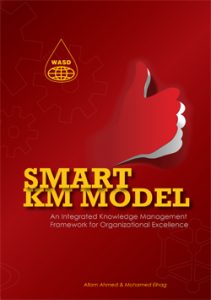
During the course, participants will learn about the ‘Smart KM Model’ which offers insight into KM processes, the challenges in introducing effective KM regime, and offers the ‘Smart KM Model’ as a tool to overcome challenges. SMART KM model aimed at managers of corporations and government policy makers providing an effective tool to help ensure KM becomes part of organizational culture. Drawing on the experts’ own research and synthesizing the work of others in the KM area, the model will help to facilitate the process of managing knowledge within organizations including the creation, acquisition, transfer and use of knowledge, both within and between organizations.

At the end of the course attendees should be able to acquire a comprehensive knowledge and practical experience about KM and leadership styles and approaches in alignment with the local needs and capabilities. Moreover, after competition of the course, attendees to write a report, supported by the tutor, of what they have learnt and what is particularly relevant to their employers. A focus to be one aspect of the course which has implications for the way they will improve their professional practice when they return to their employers. This will help reassure the employers of the benefits of the programme and help consolidate the understanding of the manager.

Related Sustainable Development Goals
  • SDG4
  • SDG8
  • SDG9
Delivery Languages
  • English
  • Arabic
Related Courses
  • Innovation
  • Entrepreneurship
  • Economy
  • Investment
  • HRM
  • Higher Education
  • Sustainability Masterclass
  • Health
  • Leadership
  • Performance Improvement
  • Public Policy
  • Artificial Intelligence
  • Data Science
  • Knowledge Management
  • Technology Transfer
  • Digital Transformation
  • Management
Location

London, Greater London, England, United Kingdom

Get Directions
Country/Regions
  • Europe
  • UK
Social Networks
  • Facebook
  • Twitter
  • YouTube
  • LinkedIn
  • Website
What will you learn
  • Subjects covered within the course will include introduction to leadership; difference between leadership and management; leadership skills and tactics; effective leadership; lessons learned from great leaders; communication skills; speaking in public places; and how to become an aspiring leader.
  • KM topics will include: an introduction to KM; initiating KM projects in your organization; KM technologies and systems.
  • Understand what is KM Framework: the behaviours, standards and solutions that allow you to share and use information to support your sector, division and personal goals.
  • Provide examples of relevant knowledge items and the documents you will need to populate the new KM system and to share across your organization.
  • Understand the role and responsibilities of the KM Office as part of a hub and spoke model to ensure consistency in standards and approach as well as the role of Knowledge Champions in the establishment of the KM culture within your organization.
Program Structure
  1. For each session there is an activity or set of activities. These are designed to help you engage with the introduction to the theories explored within the workshop.
  2. Your tutor will be on hand to guide you through the course and will expect you to bring to bear personal experience and reflection on the topics covered.
  3. Group work will be required for participants to engage in the workshop. Such activity allows participants to embed the new knowledge within their experience through active discussion and challenge

DAY ONE 

  • Arrival refreshment, registration and welcome
  • Understanding KM within organizations
  • Facing change and transformation decisions?
  • KM Live Demo/Case Studies
  • Discussion and reflection

DAY TWO 

  • Arrival Refreshment and reflection on day one
  • Managing people, information and processes
  • Evaluate the benefits of carefully thought through KM strategies
  • Establishment of KM Community of Practice (CoP) in your organization
  • Discussion and reflection

DAY THREE 

  • Arrival Refreshment and reflection on day two
  • SMART KM Framework
  • KM readiness assessment exercise for your organization
  • Discussion and reflection

DAYFOUR 

Visits to various Police Departments

DAY FIVE 

  • Arrival Refreshment and reflection on day four
  • Leadership and empowerment
  • Leadership strategies and applications
  • Roundtable discussion
  • Certificates and Next steps
Target Participants
  1. The course covers materials for all levels from supervisory through to senior level.
  2. Managers and directors responsible for transformation, project, programme, knowledge, innovation or change management.
  3. Experienced managers who have significant futures oriented management responsibilities, and who are interested in reflecting on their own experience and discovering new ideas
  4. Sector managers responsible for leading change and transformation efforts
  5. Academics including researchers and students who are interested in KM and in being part of an engaging educational experience that explore the challenges and opportunities that face organizations
Benefits for Employers
  1. This integrative course aims to develop a deeper understanding of the theoretical and practical aspects to KM, and to develop the essential skills and competencies necessary to plan, monitor and control different tasks and events.
  2. Identify key enablers and organization ecosystem that’s support effective KM.
  3. Develop an understanding of the different approaches to leadership and management.
  4. This course will also complement the different management skills already developed through earlier business and management courses.
  5. Addresses the practical challenges that managers face as they seek to build, upgrade and exploit knowledge assets within their organizations
  6. Explore the different perspectives on KM
  7. Debate the importance and value of managing knowledge within your organization
  8. Align KM thinking with broader, more traditional strategic approaches
  9. Using participants’ own organizations as cases, participants will explore how and when they can establish KM initiatives in their organizations and who will be involved?
  10. Identify and examine the objectives, advantages, drawbacks, models, stages and requirements of KM framework
  11. Understand how the new KM system will allow you to capture and store knowledge through various mechanisms
  12. In addition, participants will have insight into: critical analysis; interactive and team working; creativity; and problem solving.
Contact Us
To register/enquire about this course and all our various comprehensive list of courses and workshops, please contact us (admin@wasd.org.uk) and if you have any question and/or if you would like to request a training workshop/program not listed in our portfolio please contact our training coordinator Janet Snow at: janet.snow@wasd.org.uk.
Fees

Included in the course fee, the following learning materials will be provided:

  1. Admission to all sessions including all coffee/tea breaks and lunches.
  2. All overhead slides.
  3. Case studies (print and video).
  4. Copy of the workshop main textbooks, SMART KM MODEL (ISBN: 978-1-907106-60-6) and From Oil to Knowledge (ISBN: 9781783533572).
  5. Certificate of attendance from Queen Mary University of London and WASD.
Register

Error: Contact form not found.

You May Also Be Interested In

Digital Transformation and Sustainable Development for Future Women Leaders

18 July 2023This two-day course will be facilitated by world renowned experts in Digital Transformation…
  • Phone Number
  • SDG4
  • +2

    Artificial Intelligence and Data Science

    This course has been designed to introduce a variety of fundamental perspectives on Artificial Intelligence…
    • Phone Number
    • SDG8
    • +5

      Strategic Leadership and Performance Improvement in Higher Education

      Three Days Course        23 May 2023         Certificate of attendance from Queen Mary University of…
      • Phone Number
      • SDG4
      • +7

        © Wasd

        Cart

        • Facebook
        • Twitter
        • WhatsApp
        • Telegram
        • LinkedIn
        • Tumblr
        • VKontakte
        • Mail
        • Copy link