Overview
10 July 2023
This five-day course and tour has been designed to introduce a variety of perspectives on executive leadership and knowledge management (KM) in the public sector with special focus on Police Officers. The course aims to enable leaders and decision makers to introduce fit-for-purpose leadership styles and KM approaches to their organisations. This integrative course aims to develop a deeper understanding of the theoretical and practical aspects to leadership, and to develop the essential skills and competencies necessary to plan, monitor and control different tasks and events.
This course will also complement the different management skills already developed through earlier business and management courses. Moreover, the course addresses the practical challenges that managers face as they seek to build, upgrade and exploit knowledge assets within their organizations. Other objectives of the course include:
- Explore the different perspectives on KM
- Debate the importance and value of managing knowledge within your organization
- Align KM thinking with broader, more traditional strategic approaches
- Using participants’ own organizations as cases, participants will explore how and when they can establish KM initiatives in their organizations and who will be involved?
- Identify and examine the objectives, advantages, drawbacks, models, stages and requirements of KM framework
- Understand how the new KM system will allow you to capture and store knowledge through various mechanisms
- In addition, participants will have insight into: critical analysis; interactive and team working; creativity; and problem solving.
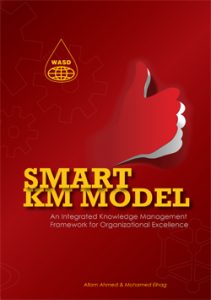 During the course, participants will learn about the ‘Smart KM Model’ which offers insight into KM processes, the challenges in introducing effective KM regime, and offers the ‘Smart KM Model’ as a tool to overcome challenges. SMART KM model aimed at managers of corporations and government policy makers providing an effective tool to help ensure KM becomes part of organizational culture. Drawing on the experts’ own research and synthesizing the work of others in the KM area, the model will help to facilitate the process of managing knowledge within organizations including the creation, acquisition, transfer and use of knowledge, both within and between organizations.
At the end of the course attendees should be able to acquire a comprehensive knowledge and practical experience about KM and leadership styles and approaches in alignment with the local needs and capabilities. Moreover, after competition of the course, attendees to write a report, supported by the tutor, of what they have learnt and what is particularly relevant to their employers. A focus to be one aspect of the course which has implications for the way they will improve their professional practice when they return to their employers. This will help reassure the employers of the benefits of the programme and help consolidate the understanding of the manager.