• PUBLISHING
    arrow_drop_down
    • Overview
      arrow_drop_down
      • Publishing Ethics
      • Indexing & Ranking
      • Editorial Boards
    • Journals
      arrow_drop_down
      • All Journals
      • WJEMSD
      • WJSTSD
      • IJIKMMENA
      • IJFNPH
      • IJSR
      • WJWSD
      • WJYSD
      • IJGA
    • Books
      arrow_drop_down
      • All Books
      • Outlook
      • GTSD
      • Diaspora
      • MENA
      • Africa
      • Sudan
      • Proceedings
    • Digital Library
    • Book Store
  • CONFERENCES
    arrow_drop_down
    • Overview
      arrow_drop_down
      • Past Speakers
      • Host Requirements
      • Sponsorship Opportunities
        arrow_drop_down
        • Past Sponsors
    • Search All
      arrow_drop_down
      • Forthcoming
      • Past
    • Search by Subject
      arrow_drop_down
      • Sustainability
      • United Nations
      • Diaspora
      • Africa
        arrow_drop_down
        • Sudan
      • MENA
      • Policy
        arrow_drop_down
        • Climate Change
        • Health
          arrow_drop_down
          • Covid 19
          • Public Health
        • Education
          arrow_drop_down
          • Graduates
          • E-Learning
        • Women
        • Youth
      • Leadership
      • Business
        arrow_drop_down
        • Entrepreneurship
        • Investment
  • ACADEMY
    arrow_drop_down
    • Overview
    • Training
      arrow_drop_down
      • Overview
      • Search All
        arrow_drop_down
        • SUSTAINABILITY MASTERCLASS
          arrow_drop_down
          • Economy
          • Sustainability
        • PUBLIC POLICY
          arrow_drop_down
          • Public Policy
          • Education
          • Higher Education
          • Health
            arrow_drop_down
            • Covid-19
          • Women
          • Youth
          • Security
        • DIGITAL TRANSFORMATION
          arrow_drop_down
          • Artificial Intelligence
          • Data Science
          • Digital Transformation
          • Innovation
          • Knowledge Management
          • Technology Transfer
        • BUSINESS & MANAGEMENT
          arrow_drop_down
          • Entrepreneurship
          • HRM
          • Leadership
          • Management
          • Performance Improvement
          • Investment
      • Workshops
    • Teaching
      arrow_drop_down
      • Framework
      • Universities
    • Research
      arrow_drop_down
      • Research Tracks
    • Consultancy
      arrow_drop_down
      • Smart KM
  • SDGs Universities
  • Interactive Map
  • African Universities
  • Interactive Map
  • Arab Universities
  • Interactive Map
  • Sudan Universities
  • Interactive Map
  • COMMUNITY
    arrow_drop_down
    • Overview
    • Search All
      arrow_drop_down
      • Children
      • Diaspora
      • Debates
      • Health
      • Ideas
      • Interviews
      • MENA
      • Women
      • Sudan
      • Youth
  • EXPERTS
    arrow_drop_down
    • Overview
  • Global Who’sWho
  • Interactive Map
  • Arab Who’sWho
  • Interactive Map
  • Africa Who’sWho
  • Interactive Map
  • Sudan Who’sWho
  • Interactive Map
  • Sudan Doctors
  • Interactive Map
  • PARTNERSHIPS
    arrow_drop_down
    • Association of African Universities
  • Overview
  • Framework
  • Partners
  • World Organisations
  • Search All
  • Europe
  • United Kingdom
  • North America
  • USA
  • Canada
  • Oceania
  • Australia
  • New Zealand
  • Asia
  • China
  • Africa
  • Sudan
  • MENA
  • GCC
  • UAE
  • Bahrain
  • Oman
  • KSA
  • Qatar
  • Kuwait
  • Latin America
  • Caribbean
  • United Nations
  • Private Sector
  • Financial Institutions
    arrow_drop_down
    • Chambers of Commerce
  • Think Tanks
  • Libraries
  • NGOs
  • NEWS
  • Portfolio
  • Teams
Sign in or Register

Multilateral Diplomacy in the United Nations Matrix

  • Send an email
  • Leave a review
  • Overview
  • Learning Outcome
  • Program
  • Resources
  • Participants
  • Registration
  • prev
  • next
  • Get directions
  • Leave a review
  • Share
  • prev
  • next
Overview

Multilateral Diplomacy in the United Nations Matrix
20 Hrs

Monday 5 – Friday 9 June 2023
London – United Kingdom

REGISTER

This integrative workshop aims to develop a deeper understanding of the Multilateral Diplomacy in the United Nations Matrix, more specially the responsibilities of the United Nations system in all its complexity, potential and limits. The main highlights in its evolution as an intergovernmental organization and catalyst of the interests and energies of member states and other stakeholders, will bring new perspectives on the legitimacy of the United Nations as a provider of global public goods and a centre of cooperation, multilateral diplomacy, and international law.
Related Sustainable Development Goals
  • SDG16
  • SDG17
Delivery Languages
  • English
Related Courses
  • Security
  • Leadership
  • Public Policy
Team

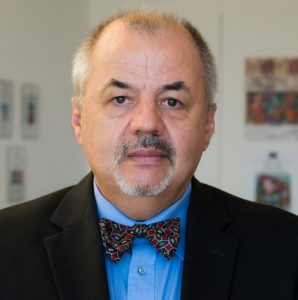
The workshop will be facilitated by Ambassador (Ret) Dr. Petru Dumitriu, a leading international expert in international relations and diplomacy with more than 30 years' experience with the United Nations System. He is a leading international expert in international relations and diplomacy with more than 30 years' experience with the United Nations System. He was a former member of the Joint Inspection Unit of the United Nations system in the period (2016-2020). Previously, he was Ambassador and Permanent Observer of the Council of Europe to the United Nations Office and other international organisations in Geneva (2011-2014), Representative of RomDania in the Executive Board of UNESCO (2010–2011), national coordinator of the United Nations Alliance of Civilizations (2008–2011), and Director General for Multilateral Affairs and Director General for Global Affairs in the Ministry of Foreign Affairs of Romania  (2006-2010). Prior to this appointment he served in the Permanent Mission of Romania to the United Nations in Geneva (2001–2005) and New York (1994-1998). He has also been a member of the International Advisory Board of New or Restored Democracies (2006 to 2009), an elected member of the UN Committee on Contributions (2001–2009), rapporteur of the Geneva phase of the World Summit on the Information Society (2002), and Secretary-General of the Third International Conference of New and Restored Democracies (1997). He was also vice-president of the UNICEF Executive Board (1995), the UN Commission on Disarmament (1997), and the Special Political and Decolonisation Committee (1997). His flagship books are The United Nations System in the Context of Globalization: The Reform as Will and Representation (in Romanian) and Diversité dans l’unité: La capacité de négociation de l’Union Européenne au sein de la Commission des droits de l’homme des Nations unies. He is the Editor of numerous UN Joint Inspection Unit reports including:

(2020) "Blockchain applications in the United Nations system: towards a state of readiness"
(2020) "Policies and platforms in support of learning: towards more coherence, coordination, and convergence";
(2019) “Strengthening the policy research uptake in service of the 2030 Agenda for sustainable development”;
(2018) "Role of Public Private Partnerships (PPPs) in the Implementation of Agenda 2030"; and
(2016) “Knowledge Management in the United Nations System“.

Location

London, Greater London, England, United Kingdom

Get Directions
Country/Regions
  • Europe
  • UK
Social Networks
  • Facebook
  • Twitter
  • YouTube
  • LinkedIn
  • Website
What will you learn

The workshop aims to cover the following subjects

  • Conceptual evolution (CE 6 topics)
  • Institutional framework (IF 3 topics)
  • Case studies (CS 8 topics)
  • Practical activities (PA - 3 topics)

Part I. Conceptual evolution

  1. Once upon a time there was a concert - origins of multilateral diplomacy (CE 1)
  2. From the law of force to the force of law - the heritage of the League of Nations (CE 2)
  3. Thinking of peace in times of war - the birth of the United Nations Charter (CE 3)
  4. A new balance of power - main changes in the United Nations politics (CE 4)
  5. Old wine in new bottles? - reforming the United Nations (CE 5)
  6. The soft power of the world organization - United Nations concepts of global governance (CE 6)

Part II. Institutional framework

  1. A short journey through the labyrinth. What is the United Nations system?  (IF 1)
  2. A complex world, a complex organization. The nature and the thematic areas of the subsidiary organs (IF2)
  3. On the stage and behind the scenes. The nature of the United Nations meetings. Procedures and voting. (IF 3)

Part III. Case studies

  1. The textual analysis of a United Nations resolution (CS 1)
  2. Deeper analysis of key Articles of the UN Charter (CS 2)
  3. The scale of assessment and the regular budget of the United Nations (CS 3)
  4. The codification of the international law of human rights (CS 4)
  5. Substantive analysis of the advisory opinion of the International Court of Justice-Kosovo (CS 5)
  6. The Ottawa process (CS 6)
  7. The Global Compact (CS 7)
  8. Agenda 2030 and other global agendas (CS 8)

 Part IV. Practical activities

  1. Writing a statement for the general political debates in the General Assembly (PA 1)
  2. Drafting a General Assembly resolution (PA 3)
  3. Negotiating a resolution for Security Council (PA 2)

Concluding brainstorming

Reflections on the future of multilateralism

Program Structure
  • The programme will be facilitated by Dr. Petru Dumitriu, a former diplomat with more than 30 years' experience with the United Nations System.
  • The workshop will provide participants within the public and private sectors with the best scientific and management solutions to implement effective public policy in their organisations.
  • There will be an activity or set of activities for each session. These will be designed to help you engage with the introduction to the theories explored within the masterclass.
  • Your Facilitator will be on hand to guide you through the programme and will expect you to bring personal experience and reflection on the topics covered.
  • Group work will be required for participants to engage in the programme. Such activity allows participants to embed the new knowledge within their experience through active discussion and challenge.

DAY ONE (10:00-15:30)

  • Arrival and registration
  • Origins of multilateral diplomacy
  • The heritage of the League of Nations
  • What is the United Nations system?
  • The nature and the thematic areas of subsidiary organs
  • Textual analysis of a General Assembly resolution

DAY TWO (10:00-15:30)

  • Reflection on day one
  • The birth of the United Nations Charter
  • Changes in the balance of power in the United Nations
  • Deeper analysis of some problematic Articles of the UN Charter
  • Writing a statement for the general political debates in the General Assembly

DAY THREE (10:00-15:30)

  • Reflection on day two
  • The codification of the international law of human rights
  • Substantive analysis of an advisory opinion of the international Court of Justice
  • The nature of the United Nations meetings. Procedures and voting in the United
  • Nations main organs
  • The scale of assessment of the construction to the regular budget of the United
    Nations system
  • Negotiating a resolution for Security Council

DAY FOUR (10:00-15:30)

  • Reflection on day three
  • The Ottawa process
  • The Global Compact
  • Agenda 2030 and previous global agendas
  • Drafting a General Assembly resolution

DAY FIVE (10:00-13:00)

  • Reflection on day four
  • Reforming the United Nations
  • United Nations concepts of global governance
  • Reflections about the future of multilateralism
Target Participants

The workshop covers knowledge for all levels, from junior to senior positions:

  1. Diplomats of all ranks, from diplomatic attachés to ambassadors, based in their ministries of foreign affairs or posted abroad, working on bilateral or multilateral relations, in embassies or permanent missions to international organizations.
  2. Government officials with professional or personal interest in global affairs or engaged in the conception and implementation of project of public interest.
  3. Private sector managers responsible for international transactions, institutional transformation, knowledge management, and corporate social responsibility.
  4. Academics willing to complement their knowledge about multilateral diplomacy and international relations with a practitioner’s perspective.
  5. Students of international law and international organizations, non-governmental organizations and other civil society activists and groups.
  6. Researchers interested in the evolution of the United Nations in terms of institutional arrangements and international organizations.
  7. Persons interested to have a career as international public servants.
Benefits for Employers

The following Case Studies will be discussed during the workshop:

  • The Ottawa process (international treaties born outside the United Nations wedlock)
  • The Global Compact
  • Agenda 2030 and previous global agendas
  • The codification of the international law of human rights
  • Textual analysis of a General Assembly resolution
  • Substantive analysis of an advisory opinion of the international Court of Justice
  • The scale of assessment of the construction to the regular budget of the United Nations system
  • Deeper analysis of the most problematic Article of the Charter referring to peace-loving states/enemy states, limits of power of the Secretary-General, the right to self-defence, the veto privilege and the inaction by the Security Council etc.)

Practical exercise and tutorials will include:

  • Writing a statement for the general political debates in the General Assembly
  • Negotiating a resolution for Security Council
  • Drafting a General Assembly resolution
Contact Us
To register/enquire about this course and all our various comprehensive list of courses and workshops, please contact us (admin@wasd.org.uk) and if you have any question and/or if you would like to request a training workshop/program not listed in our portfolio please contact our training coordinator Janet Snow at: janet.snow@wasd.org.uk.
Fees

Included in the workshop fee, the following learning materials will be provided:

  1. Admission to all sessions including all coffee/tea breaks and lunches.
  2. All overhead slides (PDF).
  3. Case studies (print and video).
  4. Certificate of attendance from Queen Mary University of London and WASD.
Register

Error: Contact form not found.

You May Also Be Interested In

Artificial Intelligence and Data Science

This course has been designed to introduce a variety of fundamental perspectives on Artificial Intelligence…
  • Phone Number
  • SDG8
  • +5

    Strategic Leadership and Performance Improvement in Higher Education

    Three Days Course        23 May 2023         Certificate of attendance from Queen Mary University of…
    • Phone Number
    • SDG4
    • +7

      Biological agents defence and surveillance systems for early detection and emergency response protocols

      This three-day course has been designed to provide participants with extensive knowledge of biological…
      • Phone Number
      • SDG9
      • +2

        © Wasd

        Cart

        • Facebook
        • Twitter
        • WhatsApp
        • Telegram
        • LinkedIn
        • Tumblr
        • VKontakte
        • Mail
        • Copy link